|
|
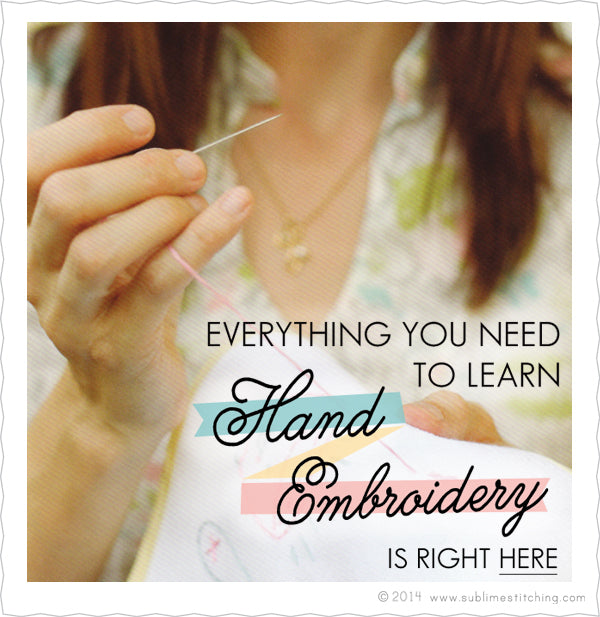
![]() Pshaw. This is a deceptively simple craft. Embroidery is easy, relaxing, and one of the least expensive crafts you can take up. |
| |
out NOW from Chronicle Books (click to order)
|
|
...that I do not consider myself to be an expert in embroidery. I am a beginner, like you, who was frustrated at the lack of instructions (and designs) for contemporary crafters who had no previous experience holding a needle and thread. When I started embroidering, I was so shocked at how easy it was I thought "For silly sakes, this can be explained in a much better way!" So, have no fear, some simple instructions are here.
The first step, the real secret of getting started, is having a pattern
to follow. There are numerous ways to get a pattern on your towel before
you embroider it. Lines can be drawn directly on the cloth with chalk
or pencil, you can trace a pattern using dressmaker's carbon paper, or
you can simply use some fancy stitches along the edge.
If you want dancing
veggies or tiki drinks adorning your linens, the easiest way to go is
with an iron-on transfer pattern. They're made with a special ink so they can be
used more than once, allowing you to combine them in your own unique way.
Have a design of your own, or one from a pattern book that you want
to transfer to cloth? Here are two easy ways of doing this:
Of course, you can take a decorative stitch and use it without a pattern.
Use a hidden or blanket stitch (see diagrams next page) in white floss along the hem of a black
skirt, for example. No pattern needed!
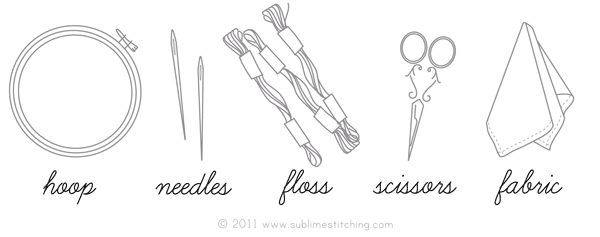
Separate the two embroidery hoops from each other. Lay the imprinted cloth
across the non-adjustable hoop so that the pattern is within the hoop.
Now place the adjustable hoop over these and press down. Make sure the
top hoop is not too tight, or you may tear the fabric. Before tightening
the screw, gently pull your fabric taut, like a drum-head. Once your fabric
is pulled evenly across the hoop, tighten the screw. You may need to re-tighten
the fabric and hoop as you work on them. When not embroidering, loosen
the adjustable hoop to avoid distortion of the fabric. The idea is to keep your fabric nice and tight when you're working on it. It's much easier to work on, and will prevent your stitches from looking loose and messy.
Cut a length of floss or thread about 12-13" long (the length of
your thumb and forefinger to your elbow). Thread the needle, and make
a knot at one end (there is no need to make a knot at the needle end,
just pull it through enough so it won't slip through the eye while you're
working). You will begin from behind the hoop, not by going through the front.
With your fabric ready on the hoop, start by bringing your needle
up from under the fabric until you hit the knot. Now, bring the needle
back down through, and you've made a stitch! Ready for more?
|
|
Sublime Stitching ®
PO Box 15130, Austin Texas 78761 site and content © 2001 All rights reserved. Privacy Policy and Terms of Use. |
|
|